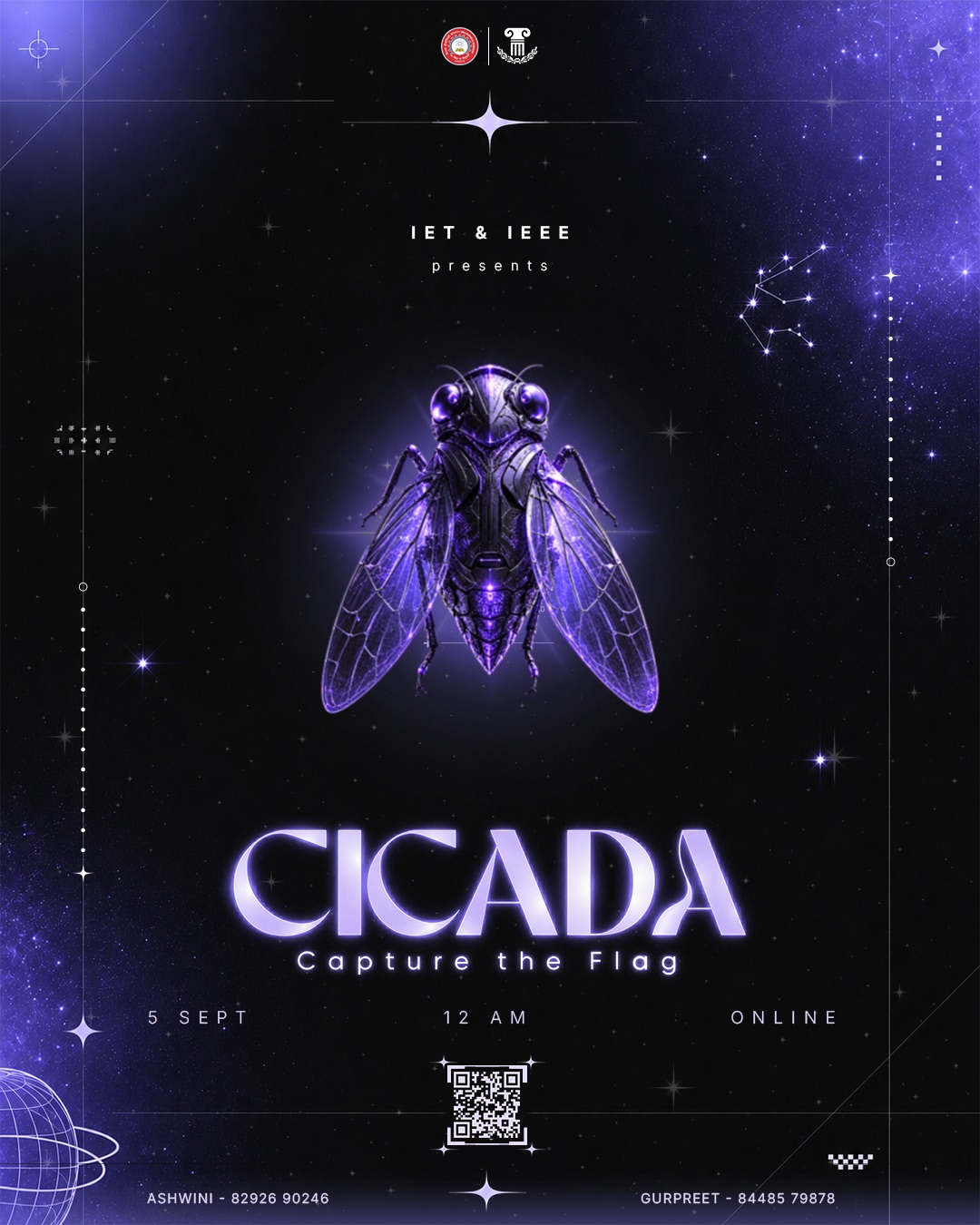
Previous Edition
Sixth Edition
Conducted earlier in 2026 by IET & IEEE BIT Mesra, featuring the signature purple mechanical cicada, full-night online competition, and cryptanalysis tracks.
A month-long collegiate cybersecurity competition uniting cryptanalysis, systems integrity, and reverse engineering. Presented jointly by the IEEE and IET Student Chapters at Birla Institute of Technology, Mesra.
Capture the flag is an intellectual competition format where students investigate real-world technology challenges across cryptography, network protocols, embedded systems, and software engineering.
Unlike 24-hour speed runs where physical fatigue dictates outcomes, CICADA unfolds over an entire month across four progressive waves. Teams have the time to read academic literature, construct bespoke analysis scripts, and study complex problems from first principles.
Modern cybersecurity is no longer a matter of memorizing textbook vulnerabilities. It is an intellectual battle to synthesize clarity from distributed chaos — reconciling algebraic ciphers, memory anomalies, and firmware telemetry.
Across thirty days and four progressive waves, CICADA CTF invites collegiate teams to step beyond conventional tooling and construct foundational understanding from first principles.
CICADA CTF is forged at the intersection of two premier engineering disciplines at BIT Mesra. The IEEE Student Chapter crafts challenges rooted in mathematical foundations, algebraic ciphers, and analog signal modulation.
Concurrently, the IET Student Chapter engineers challenges in embedded microcontrollers, cyber-physical hardware interfaces, stateful protocol logic, and deep binary disassembly.
Challenges release in sequential waves, allowing teams to focus deeply on specific problem domains before advancing to complex multi-layer scenarios. Unconfirmed exact calendar dates will be officially published prior to kickoff.
Once a wave unlocks, its challenges remain accessible until the final hour of the competition. Early waves provide welcoming on-ramps suitable for students with solid foundational computer science skills.
Introductory cryptanalysis, web telemetry, and foundational algorithmic logic.
Public-key algebraic attacks, TLS handshakes, and stateful protocol verification.
Embedded firmware, microcontroller logic, and spectral waveform demodulation.
Multi-layer binary reverse engineering, high-assurance invariants, and full system proofs.
Founded at Birla Institute of Technology, Mesra in 2018–2019, CICADA CTF has grown from an institutional trial into a premier month-long national collegiate gauntlet.
Conducted earlier in 2026 by IET & IEEE BIT Mesra, featuring the signature purple mechanical cicada, full-night online competition, and cryptanalysis tracks.
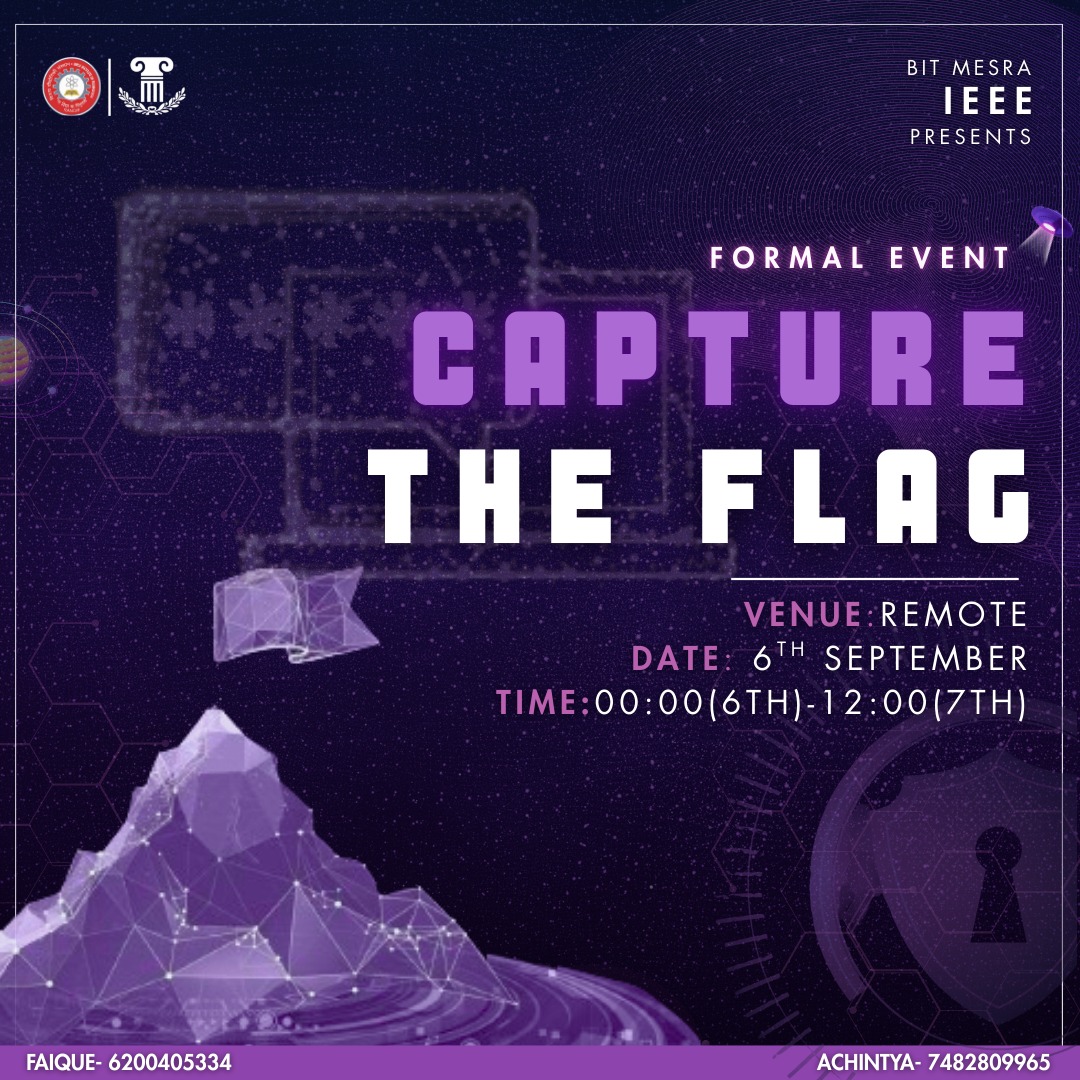
A 36-hour remote formal competition presented by IEEE BIT Mesra, challenging participants with multi-layered cryptanalysis, system keyholes, and terminal puzzles.
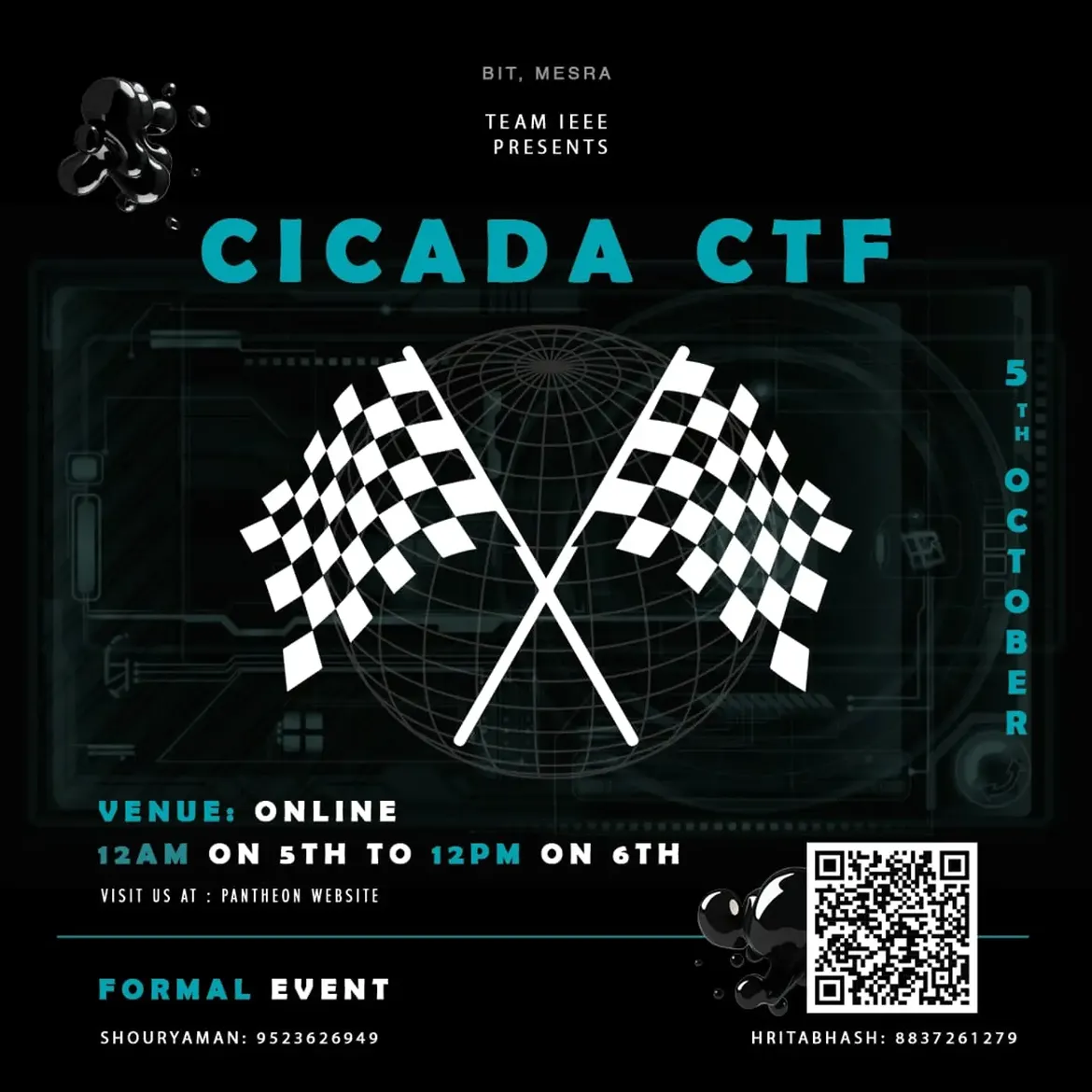
The signature 36-hour online gauntlet hosted by Team IEEE at Pantheon, uniting crossed-flag cybersecurity sprints, network penetration, and wireframe globe challenges.
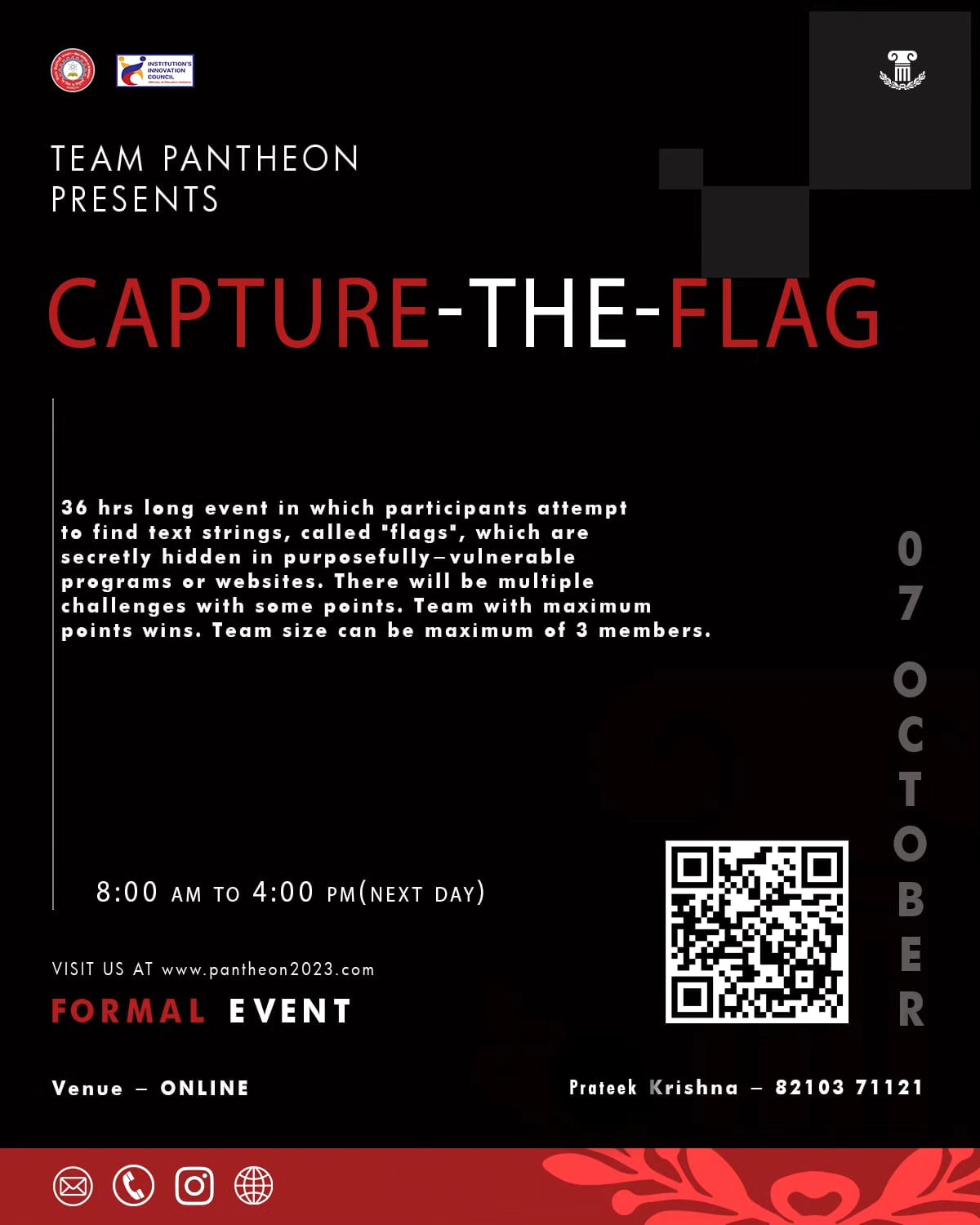
A 36-hour endurance trial for teams up to 3 members, hunting hidden flags across purposefully vulnerable programs, web applications, and point-weighted tracks.
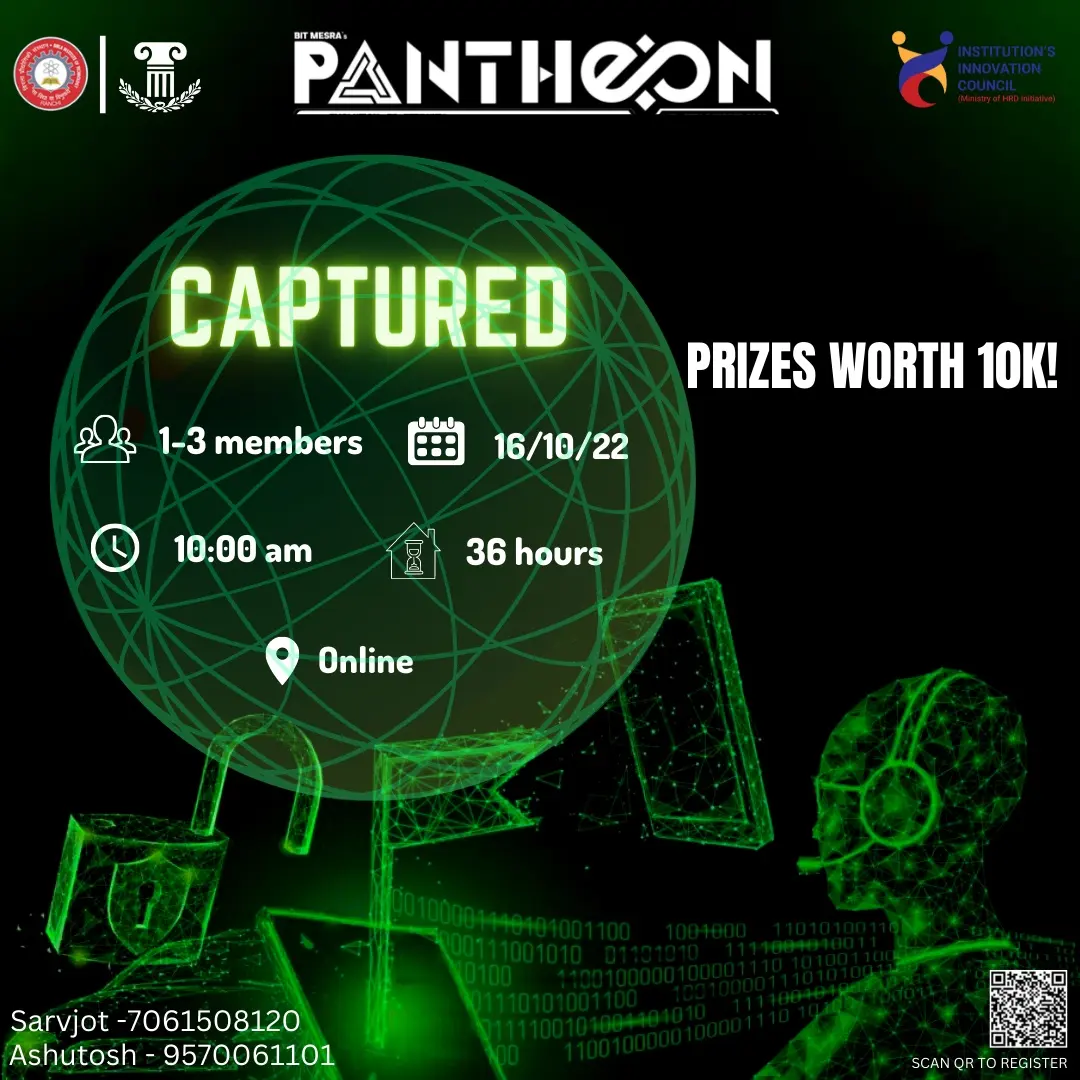
A 36-hour matrix-themed online sprint with 10K in prizes for teams of 1–3, testing binary exploitation, cryptographic locks, and green-wireframe defensive puzzles.
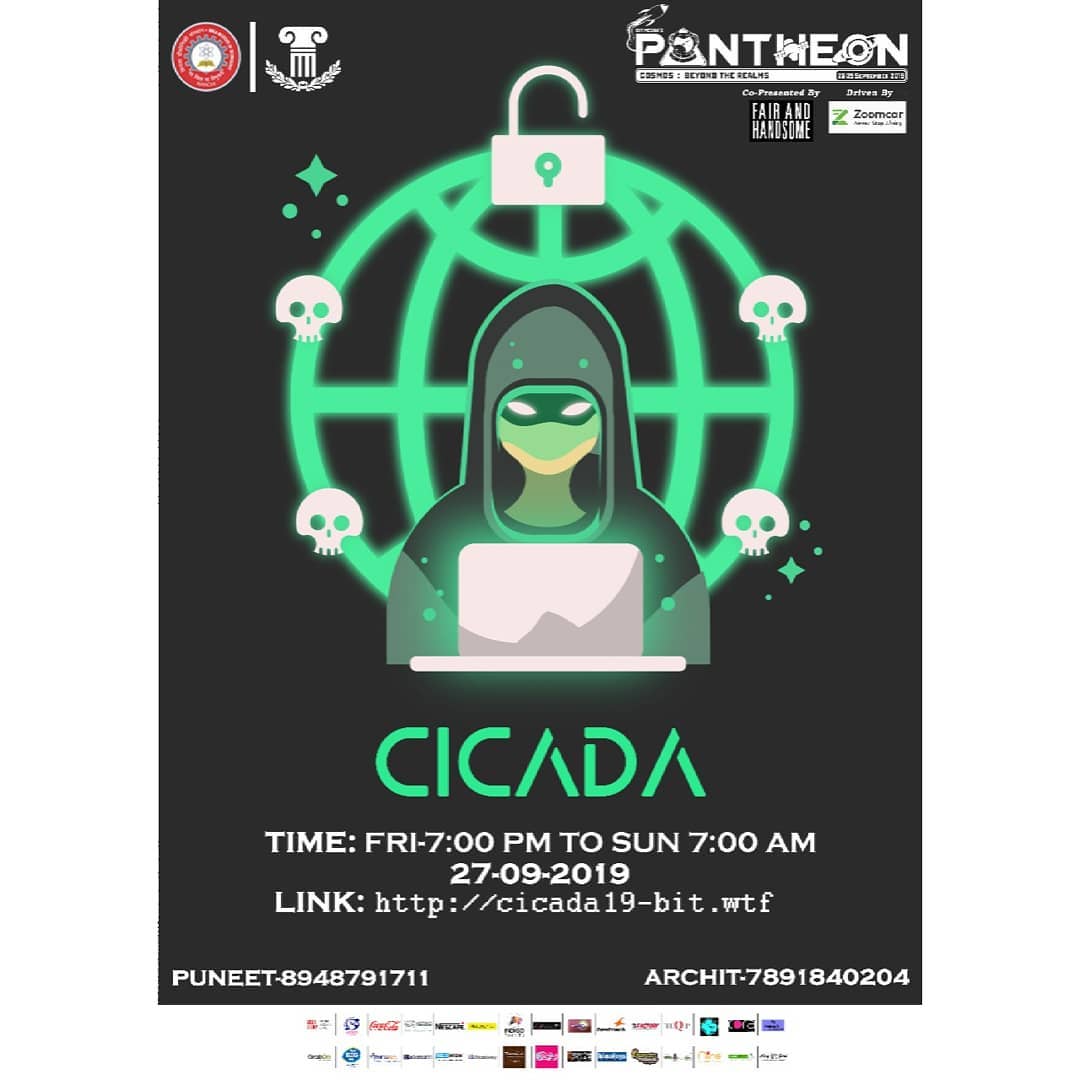
The historic inaugural 36-hour CICADA CTF during Pantheon 2019, launching the tradition with cyan cybernetic terminal hacking and collegiate challenge networks.
Integrity is the only invariant. Excellence is forged through honest investigation.
Undergraduate and postgraduate students enrolled in recognized universities globally are eligible. Teams consist of 1 to 3 members. Solo participants are warmly welcome, and team members may belong to different departments or academic institutions.
All submitted solutions must be the original, independent work of the team. Sharing solution artifacts, private writeups, exploit steps, or collaborative hints with other competing teams during active waves is strictly prohibited and results in immediate disqualification.
Denial of service (DoS/DDoS) attacks against event infrastructure, brute-forcing registration portals, and attempts to compromise hosting nodes are strictly disallowed. Investigation and evaluation are confined strictly to challenge targets designated by the organizers.
Points are assigned based on challenge difficulty within each wave. In the event of a points tie, ranking precedence is resolved by the earliest timestamp of the team's final accepted submission. The determinations of the joint IEEE and IET organizing committee are final and binding.
Essential information regarding collegiate participation, team logistics, and competition guidelines.
Yes. Participation in CICADA CTF 2026 is completely free for all eligible collegiate students globally. There are zero registration fees, platform charges, or hidden requirements.
No. Wave 01 is intentionally engineered with accessible on-ramps suitable for students with solid foundational computer science and logic fundamentals. Difficulty scales progressively over the 30 days.
Yes. The entire competition takes place online. Team members may collaborate remotely across different geographical locations, timezones, and universities.
A standard modern web browser, a Unix-like shell environment (Linux, macOS, or WSL), and standard scripting utilities such as Python 3. Detailed tool guides will be published prior to Wave 01.
Official digital certificates of participation and merit are issued jointly by the IEEE and IET Student Chapters at BIT Mesra. Top-performing collegiate teams will be recognized with prize distributions announced prior to kickoff.
The emergence of Wave 01 commences December 10, 2026. Prepare your analytical toolchain, review foundational algebraic ciphers, and assemble your collegiate squad.